
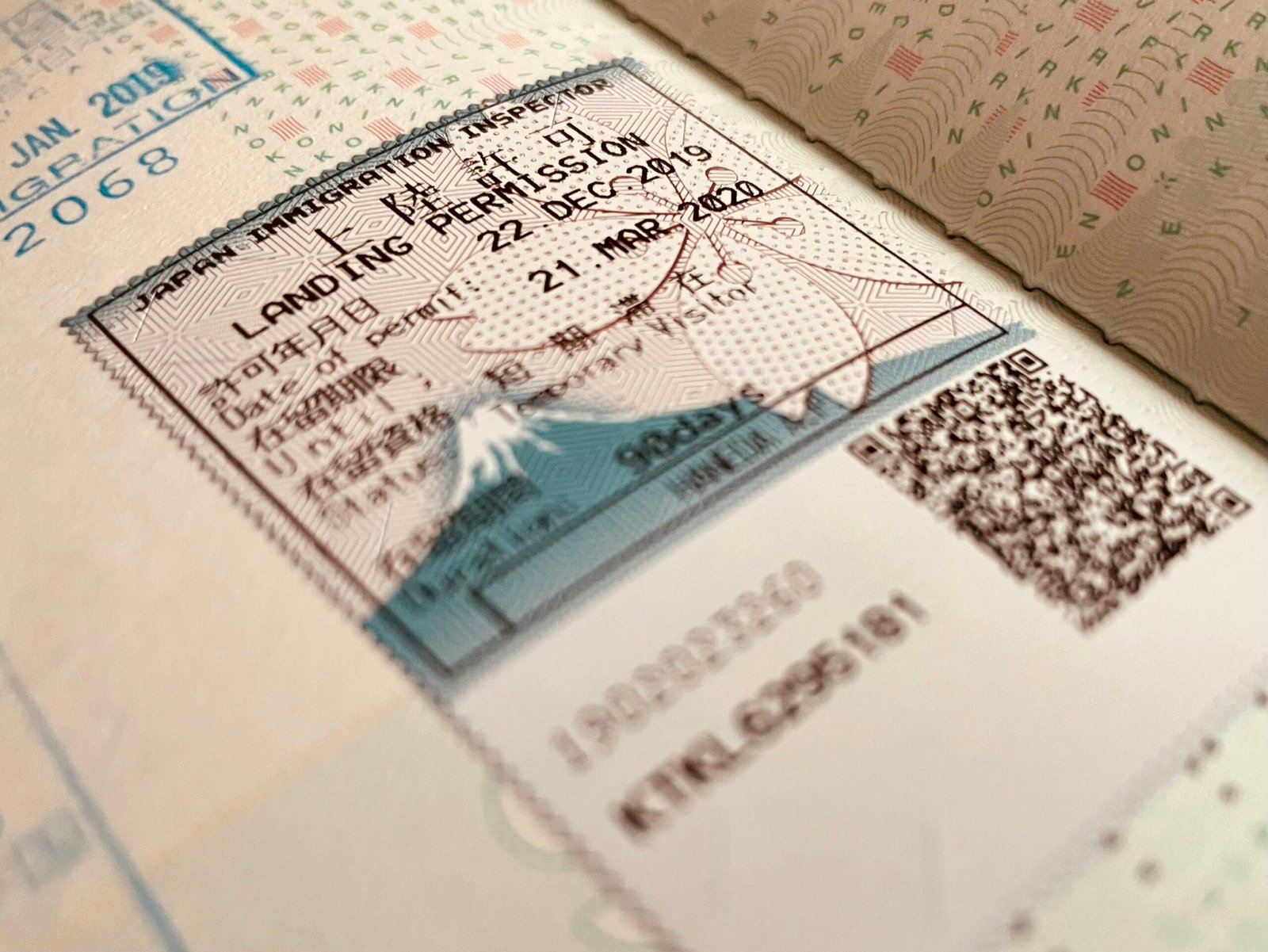
Introduction to immigration laws
Immigration laws are a set of rules and regulations that govern the movement of people between different countries, as well as their residency and rights within a specific country. These laws are essential due to their significant impact on a country’s social, economic, and political landscape. The evolution of immigration laws has been dynamic and often reflects global challenges, such as humanitarian crises, population growth, and labor demands. Consequently, these regulations affect not only immigrants but also host societies, which must adapt to the cultural diversity and demographic changes that migration brings.
In recent decades, immigration policies in countries such as Canada, the United Kingdom, Europe, Spain, Germany, and Poland have undergone substantial changes. Each nation has sought to balance its economic needs with security and humanitarian considerations. For example, while some nations adopt a more open and welcoming approach toward immigrants, others have opted for more restrictive measures. This contrast reveals the different philosophies and priorities in migration management.
In this context, it is essential to understand how immigration laws not only determine who can enter and obtain legal status in a country, but also influence the social and economic integration of migrants. Recent changes in immigration policies reflect the need to address global challenges, such as climate change and forced mobility. To offer a broader perspective, this article will explore the updated immigration laws of several countries, providing a comparative analysis that highlights the similarities and differences between these laws.
Immigration laws in Canada
Immigration laws in Canada have undergone significant changes in recent years, driven by the need to respond to current social and economic dynamics. One of the most notable developments has been the update to immigration programs, which now prioritize applicants’ skills and work experience. The Canadian government has introduced new categories in the Express Entry system, focusing on attracting skilled professionals who can contribute to the country’s growth.
Visa requirements have also been revised, streamlining the process for certain groups, such as international students and temporary workers. Starting in 2023, the Electronic Travel Information System (eTA) has been required for more countries, requiring visitors traveling to Canada to pre-register online. This is part of an overall effort to strengthen security and improve border management.
In addition, refugee-related policies have been the subject of debate and review. Canada remains committed to providing asylum to individuals fleeing conflict and persecution, but adjustments have also been made to the assessment processes to ensure that applications are handled effectively and transparently. According to official reports from the Government of Canada, the number of refugees admitted to the country has increased, reflecting an inclusive policy that seeks to offer protection to the most vulnerable.
It is important to note that Canadian immigration laws are subject to change, and those interested in immigrating or visiting the country are advised to consult official sources such as the Government of Canada website for up-to-date and accurate information on current immigration procedures and requirements.
🔍 What is a Work Permit?
- Most foreign nationals need a work permit to work legally in Canada.
- There are two main types:
- Employer-specific work permit: authorizes you to work for one specific employer, in a defined position and location.
- Open work permit: allows you to work for almost any employer in Canada (with some exceptions).
🧾 General Eligibility Requirements
Regardless of type, you must:
- Prove you will leave Canada once your permit expires.
- Show you have enough financial means to support yourself and return home.
- Have no criminal record (may require police certificates).
- Be in good health (and complete a medical exam if required).
- Ensure your employer is eligible and not listed as “ineligible” by Immigration, Refugees and Citizenship Canada (IRCC).
🏗 Step-by-Step Process (Employer + Worker)
Step 1: Job Offer and Employer Compliance
- You must have a valid job offer from a Canadian employer.
- In many cases, the employer must first obtain a Labour Market Impact Assessment (LMIA) to prove no Canadian worker is available for the job.
- If the position is LMIA-exempt, the employer must submit the offer through the Employer Portal and provide you with an “offer of employment number.”
Step 2: Applying for a Work Permit
- With the job offer and LMIA (or exemption), you apply for a work permit through IRCC.
- Documents required: valid passport, job offer letter, LMIA or exemption proof, educational/professional certificates, police clearance, medical exams (if required).
- Pay government processing fees.
- Provide biometrics (fingerprints and photo) if requested.
Step 3: Decision and Travel
- IRCC reviews the application and issues the work permit if approved.
- On arrival in Canada, border officers will check your documents and conditions of your permit.
📌 Key Considerations
Your permit specifies: employer, role, location, and duration. You cannot freely change jobs without applying for a new permit.
If you wish to extend or change conditions, you must apply for a new permit before expiry.
In some cases (for example, spouses of skilled workers), you may qualify for an open work permit.
✅ In summary:
To work legally in Canada with a job contract, you need (1) a valid job offer, (2) often an LMIA approval by your employer, (3) to apply for a work permit with IRCC, and (4) comply with all eligibility requirements (health, security, financial, and immigration).
Updates to UK immigration laws
Since the United Kingdom’s withdrawal from the European Union, known as Brexit, immigration laws have undergone significant changes that have impacted both British citizens and foreigners wishing to live and work in the country. One of the most notable changes is the implementation of a new points-based system, replacing the previous freedom of movement system that allowed EU citizens to reside and work without restrictions.
This new points-based system is based on specific criteria that applicants must meet to obtain a work visa. Points are awarded based on the worker’s skill, the job offer, English proficiency, and other factors. To be eligible, a worker must accumulate at least 70 points and work in a job that meets minimum wage standards. This has led to increased competition for foreign candidates, who must prove their worth to British companies that are part of the new structure.
In addition, EU citizens now face additional requirements to reside in the UK. Those who arrived before June 30, 2021, had the option to apply for settled or pre-settled status, which grants them certain rights. However, this process is limited and has left many uncertain. Employment and social rights have changed, and European citizens are now expected to meet the same standards applied to other migrants when seeking employment.
The current landscape of immigration laws in the UK presents a stricter environment for migrants, which has raised concerns among businesses about labor availability and access to essential talent. Immigration policies continue to evolve, and all interested parties are advised to regularly check official UK government websites for the most up-to-date and accurate information.
Immigration laws in Europe
Immigration laws in Europe are largely regulated by the policies of the European Union (EU), which seeks to establish a coherent and uniform approach to migration management within its member states. Through various treaties and directives, European governments have aligned their regulations to facilitate the free movement of people and ensure the protection of migrants’ rights. The four fundamental freedoms of the EU include the free movement of goods, services, capital, and people, which is essential for the functioning of the European single market.
One of the most significant aspects of migration policies in Europe is the Common European Asylum System, which was implemented to strengthen cooperation between member states. This system aims to provide fair and equitable treatment to asylum seekers, ensuring that those in need of international protection have access to an appropriate procedure. Recent proposals have included significant measures to improve the efficiency of assessing asylum applications and to ensure that the EU’s external borders are secure, without compromising human rights.
Regarding free movement, the EU Directive on the Free Movement of Citizens allows EU citizens to reside and work in any Member State. This has fostered greater integration and mobility between European countries, although it has also raised challenges related to social cohesion and access to basic services. The regulation of the movement of persons also encompasses the fight against irregular immigration, in which cooperation between Member States is essential to establish effective and rights-respecting procedures.
Immigration legislation in Spain
Immigration legislation in Spain has evolved significantly in recent years, impacting thousands of non-European citizens wishing to reside in the country. A fundamental aspect of this legislation is the set of requirements that applicants from outside the European Union must meet. These requirements include presenting a valid passport, meeting economic conditions that demonstrate the ability to support themselves during their stay, and having medical insurance that covers healthcare while in the country.
The process for obtaining residency in Spain may vary depending on the type of permit requested, whether temporary or permanent. Those seeking work permits must present a job offer from a Spanish employer and follow an administrative process that, if there are no irregularities, can be approved within a specific timeframe. Furthermore, current legislation has introduced measures that seek to facilitate the regularization of immigrants in certain circumstances, especially considering situations of vulnerability and asylum. This has allowed groups facing risk situations to apply for legal status, provided they meet the criteria established by the Spanish government.
Recently, the Spanish government has launched initiatives to simplify bureaucracy and reduce waiting times associated with obtaining residence permits. These reforms seek not only to attract foreign talent but also to ensure the effective integration of immigrants into Spanish society. In this context, it is essential to consult official government portals, where updates on requirements and procedures are published to ensure that applicants have the most accurate and up-to-date information on immigration legislation in Spain. The constant review of immigration policies highlights the importance of adapting regulations to changing circumstances both nationally and internationally.
Updates on immigration laws in Germany
Germany, as one of the most attractive destinations for immigrants in Europe, has recently introduced several changes to its immigration law framework. The points system for skilled immigrants has become one of the pillars of German immigration policy. This system, inspired by models in countries such as Canada, evaluates applicants based on various criteria such as education, work experience, German language proficiency, and age. An appropriate score can significantly facilitate skilled immigrants’ access to the German labor market, which contributes to the shortage of experts in various industries.
In addition to reforms targeting skilled immigrants, the treatment of asylum seekers has been another major focus of attention. Germany has maintained a commitment to international and European refugee protection law, although it has implemented measures to expedite asylum processes. In this context, efforts have been made to improve conditions in reception centers, focusing on medical care and access to legal services. However, this occurs in a climate of growing social and political debate about immigration and the country’s asylum capabilities.
On the other hand, recent integration-related changes have sought to facilitate the arrival and settlement of new immigrants. Integration programs, which include language courses and job guidance, have been expanded to ensure that newcomers can adapt more quickly to life in Germany. This policy not only benefits migrants but also strengthens social cohesion and allows for better utilization of available skills within the immigrant population. The combination of these strategies demonstrates Germany’s commitment to maintaining a fair and efficient immigration system while addressing complex challenges.
Immigration laws in Poland
Poland has undergone significant changes to its immigration laws in recent years, adapting to the growing demand for foreign workers and the dynamics of the labor market. The process for obtaining work permits, visas, and migrant rights involves several steps and conditions that must be met. Foreigners wishing to work in Poland must typically have a job offer from a Polish employer. This employer is responsible for submitting the work permit application on behalf of the migrant.
The types of work permits vary depending on the duration and nature of the employment. There are temporary permits that can be extended, as well as long-term permits that allow for greater job stability in the country. It is essential for employers to demonstrate that there are no local workers who can fill the position for which a foreigner is being hired. This results in a verification process that often includes posting job openings and a labor market analysis.
Regarding visas, migrants must avoid errors in their documents and strictly follow the requirements stipulated by the Polish authorities. Visas can be short- or long-term, and obtaining them is subject to background checks and eligibility for the requested job. It is also vital for migrants to know their rights in Poland. Polish law guarantees certain labor and social rights to migrant workers, who can access healthcare, education, and other forms of public assistance.
For the most accurate and up-to-date information, it is recommended to consult Polish government sources, such as the Ministry of Internal Affairs and the Labor Office, as immigration regulations can change frequently and are subject to interpretation and updates.
Comparison of immigration laws
Immigration is a crucial issue on the political agenda of many nations, and immigration laws vary significantly between Canada, the United Kingdom, Europe, Spain, Germany, and Poland. Each country has a legal framework that reflects its values, economic and social needs, as well as security concerns. Below, we analyze how these countries approach immigration, highlighting both similarities and differences.
In Canada, immigration laws are designed with an inclusive approach, promoting diversity and integration. The immigration system allows for both employment-based and refugee claims, and emphasizes the need for skilled workers in growing sectors. In contrast, the United Kingdom has adopted a more restrictive approach since Brexit, focusing on a points-based system that prioritizes specific skills and minimum wages.
In the European context, immigration policies are diverse. While countries like Spain have a tradition of welcoming migrants through regularization programs, Germany has focused on integrating refugees and asylum seekers through meticulous processes that seek to ensure social well-being. Poland, on the other hand, has shown some resistance to the inclusion of immigrants, although it has recently updated its laws to attract labor in response to labor demand.
Despite these differences in legislation, there is a common tendency to consider factors such as economics, demographics, and human rights in the formulation of immigration laws. Certainly, the stakeholders involved, including governments, NGOs, and international organizations, play key roles in the evolution of these regulations, promoting debates and discussing best practices in immigration policies.
Conclusions and reflections
Immigration laws in Canada, the United Kingdom, Europe, Spain, Germany, and Poland have shown evolving trends that reflect not only the internal needs of each country, but also a response to global challenges. A fundamental aspect of these policies is the attempt to balance national security with the promotion of an inclusive society. In the context of the refugee crisis, many countries have implemented more flexible regulations, seeking to offer asylum while establishing effective controls.
Demographic changes are also playing a crucial role in redefining immigration policies. With an aging population in many European nations, the need for a young and dynamic workforce has become evident. In this sense, immigration laws are not only a mechanism to control the entry of people into the country, but have also become tools to boost economic growth. For example, visa programs specifically designed to attract talent in key sectors are gaining ground, signaling a more proactive approach to migration.
However, we also face significant challenges, such as rising xenophobia and nationalism, which have driven more restrictive immigration policies in some nations. This has resulted in a polarized debate about how immigration laws affect not only immigrants but also local communities. As countries grapple with these dynamics, policies are likely to continue adapting, seeking to balance national interests with international obligations.
In conclusion, the future of immigration laws in these countries appears to be a constantly changing landscape, affected by multiple factors, including global challenges and the needs of their populations. It is essential that policymakers address these issues from a holistic perspective, considering their long-term implications for social cohesion and economic development.